

Hello home cooks! Here is Part Two of your guide to home cooking, including shopping lists and recipes that repeat many of the same ingredients. If you missed Part One, find it here.
The Easy East Asian Pantry
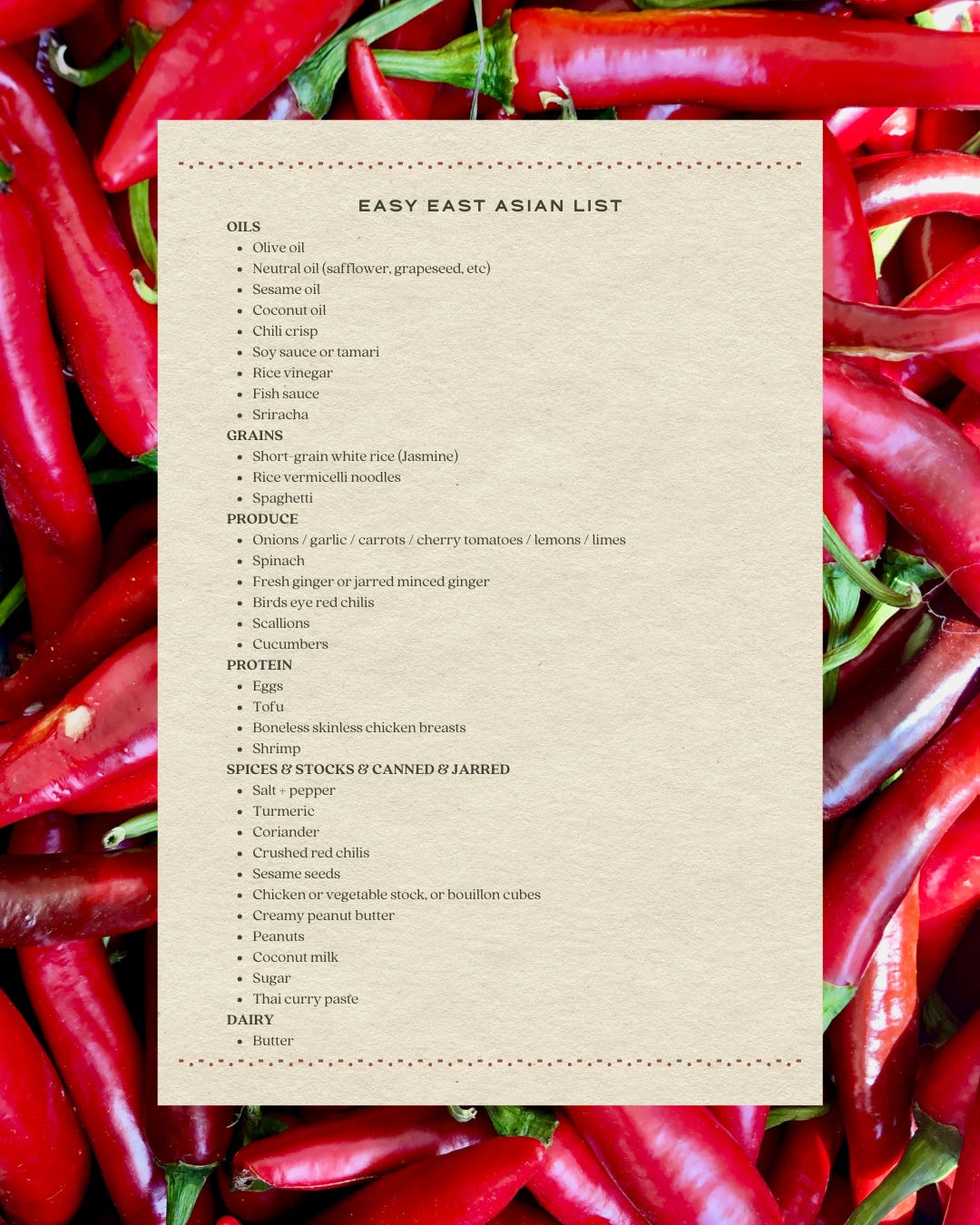
“Asian” is also a reaaaaaaally broad category but here I’ll focus on the simplest cuisines to make in an American / Canadian / European context, where what you can get at the grocery store may be limited. And here I am using “east Asian” to mean cuisines like Thai, Korean, Chinese, etc. For south Asian (Indian subcontinent), see the next section. I cook a lot of Asian food at home, and not just because I live in Asia. Once you have Asian pantry staples, it’s incredibly easy and fast to make a delicious weeknight meal.
Oils, vinegars, and sauces: Sesame oil; coconut oil; rice vinegar; low-sodium soy sauce or tamari; fish sauce; sriracha; chili crisp.
Grains: Rice vermicelli noodles; spaghetti.
Fruits and Vegetables: Spinach (keep a bag in your freezer); fresh ginger or canned minced ginger; birds-eye red chilis; scallions; cucumbers. I also love to have bok choy on hand, as it lasts a while in the fridge, and you can slice it up and toss it in almost all of the below recipes for an extra green.
Canned and jarred goods: Coconut milk; creamy peanut butter.
Proteins: Boneless skinless chicken breast; shrimp (just keep a bag in your freezer); eggs; tofu.
Spices: Turmeric; coriander, crushed red chilis.
Bonus herbs: I love fresh herbs, but often can’t find what I need at stores where I live, so I go without more than I’d like. Having fresh cilantro, mint, and basil on hand is great for Asian cooking; here’s how to store them so they last as long as possible.
Misc: Sugar; sesame seeds; peanuts
Korean-specific: If you know you want to cook Korean food, get some gochujang.
Thai-specific: If you know. you want to cook Thai food, get jarred curry paste (I like red and green).
Recipes:
Vegan Thai curry. This is another one of my go-to recipes, and I think the method makes the curry taste better, but it is a slightly more in-depth method. Here’s an even easier option that still tastes great. I usually make my curry with chicken stock (this makes it non-vegan, though), and always use full-fat coconut milk. You can toss in chicken or tofu as well. A vegetable Thai curry is great with whatever vegetables you like; I tend to enjoy bamboo shoots, red bell peppers, zucchini, eggplant, and, if it’s a red curry, pineapple.
Sesame peanut noodles. There are a bunch of easy recipes online. Here’s one, and here’s another. It’s easy to toss some tofu, bok choy, or spinach into your sesame peanut noodles for extra protein and green matter.
Thai Rama chicken. An easy peanut sauce for chicken, beef, or tofu. You can skip the chopped peanuts if you don’t have them.
Ginger fried rice. Don’t have leeks? You can use scallions. Don’t have scallions? Then just use a whole head of garlic, why not.
Fried rice. The absolute easiest, especially if you buy a freezer bag of carrots and peas. I don’t love peas in my fried rice, so I usually make this with whatever about-to-turn vegetables I have in the fridge. And if I’m feeling wild, I’dd add a soft fried egg on top, with some chili crisp.
Coconut-lime shrimp curry. Easy and delicious. I use a birds-eye chili instead of a serrano, but I like it hot.
Coconut-poached fish with bok choy. Quite similar to the recipe above, just as delicious.
The Easy South Asian Pantry
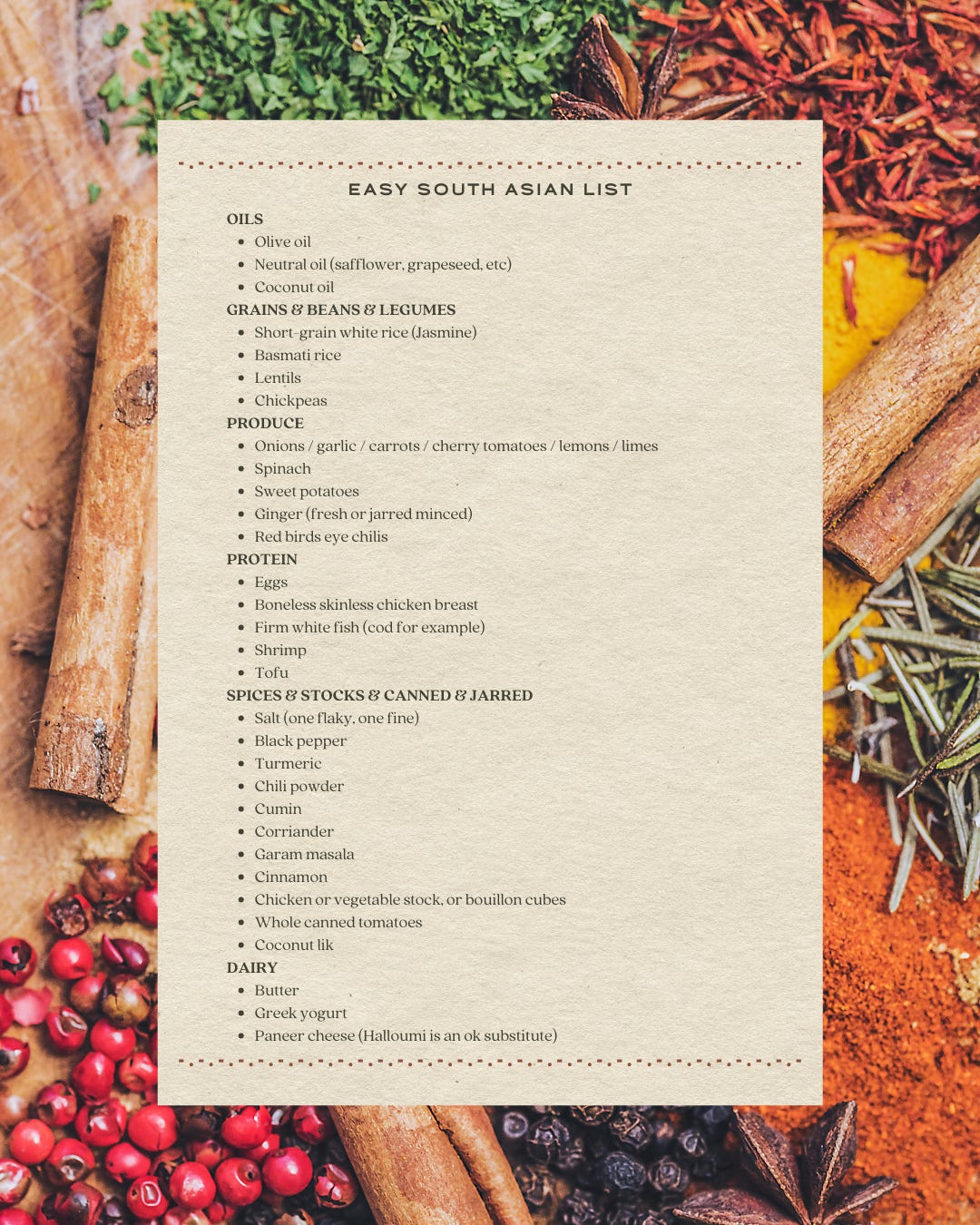
Here I’m talking Indian and Indian-adjacent, including some dishes that are to me most reminiscent of Swahili food down the coast of East Africa — not Indian, but the result of centuries of trade, and so incorporating similar spices and flavors. I tend to skew more South Indian-ish in my at-home cooking — think lots of coconut milk over, say, butter chicken — but I’ll include some recipes for Indian take-out faves.
Oils: Coconut oil.
Grains: Basmati rice.
Beans and legumes: Lentils, chickpeas.
Canned and jarred: Canned whole tomatoes, coconut milk.
Fruits and vegetables: Spinach (frozen in a bag is fine); sweet potato; cherry tomatoes; ginger; red Thai birds-eye chili.
Dairy: Greek yogurt; paneer cheese (halloumi works too if you can’t find paneer).
Proteins: Boneless skinless chicken breast; tofu; white fish; shrimp.
Spices: Turmeric; chili powder; cumin; coriander, garam masala, cinnamon.
Recipes:
Masoor dal. I adore this red lentil recipe, and I add a can of coconut milk in the last 10 minutes. You can also add in a diced carrot with your onion at the beginning for more vegetable matter, and / or a few handfuls of shopped spinach or kale at the end. (I make this a lot for my one-year-old, with as many extra vegetables as I can pack in).
Coconut fish and tomato bake. I honestly wasn’t sure where to put this recipe because it’s definitely not Indian, but it reminds me of some of my favorite Kenyan coastal food and has Indian-adjacent flavors, so it’s going here.
Tofu Makhani (butter tofu). A lighter version of butter chicken.
Coconut saag. I absolutely love this dish, a great way to pack a pound of spinach into your dinner.
Goan prawn curry. One of my all-time favorite Indian dishes, here’s a pretty simple version. You can just use chili powder instead of cayenne + hot paprika if that’s all you have.
The Mexican-ish Pantry
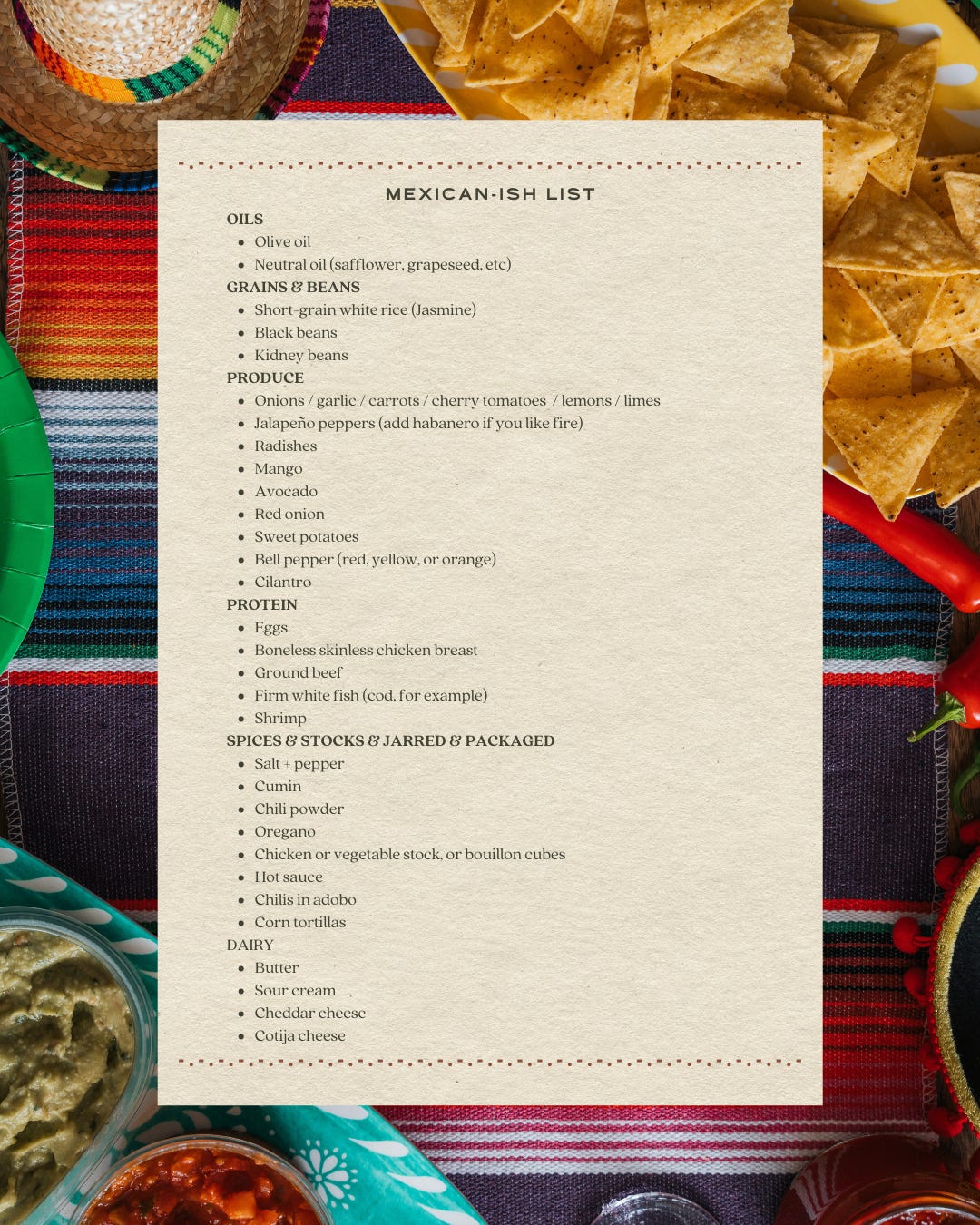
Sauces: Pick a few hot sauces and taste-test your favorite (I personally love Marie Sharp’s).
Beans: Black beans; kidney beans.
Fruits and Vegetables: Jalapeño and habanero peppers (if you like spice); cilantro; radishes; mango; avocado; red onion; sweet potatoes; bell pepper.
Canned and jarred goods: Chilis in adobo; pickled jalapeños.
Dairy: Sour cream; cheddar cheese; cotija cheese.
Proteins: Boneless skinless chicken breast; shrimp (just keep a bag in your freezer); ground beef; firm white fish like cod; eggs.
Spices: Cumin; chile powder, oregano.
Misc: Corn tortillas.
Recipes:
A delicious beef chili that you can also just make on the stove top in a Dutch oven.
Roast sweet potato and black bean salad. I have been making this for years and it never misses. Also so easy to make a big batch and eat throughout the week. It is a little more labor-intensive insofar as you have to use a blender, but it’s worth it.
…and that’s it! Of course there are a million more recipes to try, a million more things you can stock your pantry with, and at least hundreds of other cuisines, but I hope this is helpful for those of you who are just getting started as home cooks, who want to eat less take-out, or are just looking for a little food refresh.
Do you have favorite recipes / ways of cooking? Tell us about them in the comments.
xx Jill