

Reproductive rights are under extreme attack in the US. But the US is also attacking reproductive rights abroad. Last week, the Fifth Circuit Court of Appeals issued a ruling that made it suddenly illegal to ship mifepristone, part of the two-pill abortion regimen, to women across the US. The Supreme Court stayed that decision, but not permanently — we should be hearing more next week. I wrote in the New York Times about how this is the biggest blow to Americans’ abortion rights since Roe, and in Slate about how it’s only part of the much broader chaos that overturning Roe has wrought. But American abortion opponents aren’t just wreaking havoc within American borders; they’re taking their fight global.
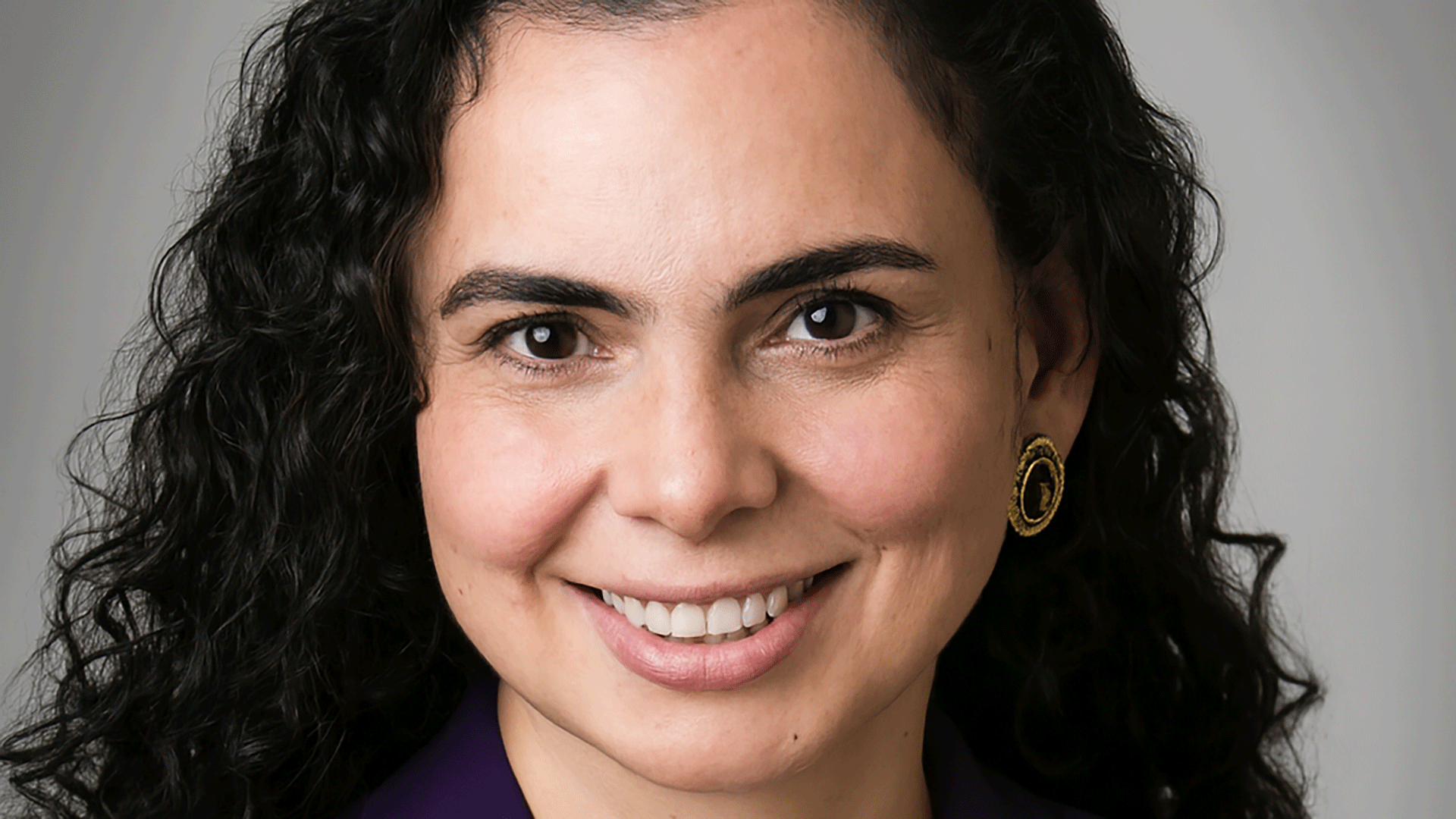
The good news is that a whole lot of people are fighting back. One of them is Maria Antonieta Alcalde Castro, the new director general of the International Planned Parenthood Federation, or IPPF, a network of more than a hundred clinics and service providers worldwide. I spoke with Maria Antonieta about her new role, the organization’s work in the era of Trump, and why Americans who care about reproductive justice should care about it beyond our own borders. Our conversation is below; it has been edited for length and clarity.
JILL FILIPOVIC: To start, can you talk a little bit about IPPF’s work? What does the organization do? What should readers know about it?
MARIA ANTONIETA ALCALDE CASTRO: IPPF is the International Planned Parenthood Federation, and we are a network of around 130 member associations. Our local organizations serve more than 150 countries because many of our member associations serve more than one country. We provide a series of public health services, and we also advocate for sexual and reproductive rights worldwide. I think that for the American audience, our brand is very well known in the US: Planned Parenthood. So we have Planned Parenthoods all over the world. For example, I just came from Kiribati, a small country. Well, not that small – it’s 33 little islands in the Pacific. There, our member association has a few clinics and does a lot of community reach. We are the biggest organization in the world that provides sexual and reproductive health services.
Jill: So with your member clinics, are you providing informational support, logistical support, or contraception tools and devices? What are you doing for the member groups?
Maria Antonieta : In most places, we have clinics where you can go and have access to contraceptives. That’s one of our main services, but also cervical cancer screens, pap smears, HIV treatment – we work a lot on HIV, offering testing, but also many of our member associations provide actual treatment. And we also have specific services for key populations: for young people, for LGBTQ community, for sex workers, for migrants. So we have clinics, actual clinics when you can get in, have an appointment, see a doctors. But a big part of our work is also to reach out to remote communities. So we have remote clinics. A couple of weeks ago, I had the privilege to visit Mauritania. It’s a huge country, with an extended part of the country in the Sahara Desert. And I went with a caravan to provide services to a population that was two hours and a half from the capital, in the middle of the desert. And there, IPPF is the only organization that provides not only sexual and reproductive health services, but any type of services. We’re there once a month providing services, and it’s family planning to HIV. And many of our member associations actually have hospitals where they do deliveries. So the spectrum of sexual and reductive health services. And, as I was mentioning in the case of Mauritania, health in general, nutrition, all the elements of health.
Jill: And what’s your background? Where are you coming from? Tell us a little bit about you.
Maria Antonieta : Well, I’m very new in the post. I’ve been in director general of IPPF for a month and a half. I started working on sexual and reproductive health and rights more than 30 years ago as a young activist. I was a peer educator. I’m Mexican, and in Mexico, I was working at the grassroots and doing community organizing, and then peer education on sexual and reproductive and rights. And that’s where I found the reproductive justice movement. And that really changed my life. I founded an organization, a local organization in Mexico that has been working on this issue and specifically on access to abortion services. And then I worked for IPPF in New York. I was the director of the UN liaison office. So I did a lot of work with the UN and with multilateral spaces.
So my background is really within the movement. I’ve been working at the very, very local community organizing grassroots level, and with two international multilateral negotiations. I had the privilege of being part of organizing not only IPPF, but with the women’s movement during the Sustainable Development goals negotiations. And so I’ve been part of all the levels and now I’m back at IPPF as director general.
Jill: As you come into the organization, what are your priorities?
Maria Antonieta : Well, I’m coming to IPPF in a very challenging time. And as you know, we are living in a world that is changing at a very rapid speed, and where we are seeing the rise of a very strong anti-choice movement. Without a doubt, US organizations and the US government play a very significant role in this attack to human rights, to women’s rights, to diversity and inclusion, and to sexual reproductive rights. So my priorities within this context is to ensure that we are able to keep serving the millions of people that we serve every year. I’m standing very strongly with the member associations to ensure that we find sources of resources, different ways, more effective ways to deliver the services that we deliver.
My second priority is to work as a movement. I think that this is a moment where we need to gather together. We cannot afford working in silos. So we’re joining forces with the HIV movement. We will see a huge peak on HIV infections, we will see setbacks, because it is a reality that the cuts in funding and the dismantling of the HIV infrastructure will have an impact. We’re working very closely with them, and also with the climate change movement, also with the human rights movement, also with the migrants movement. So that’s my second priority. And my third priority is innovation and technology. We are already advancing work on telemedicine, on self-managed health, on using AI to reach out populations that we won’t be able to reach with other means. So maintaining and persisting what we have, working in collaboration with other movements and organizations to advance our agenda all together, and thinking about technology and how to use technology to reach on the gaps that we have in access to services and human rights in general.
Jill: How has IPPF been impacted by the new Gag Rule, and by the demise of USAID? What has the Trump administration meant for your organization?
Maria Antonieta : IPPF decided not to take US funding several years ago exactly because we were seeing all of this back and forth of the Global Gag Rule. Every time that we had a Republican in power, then we had the Gag Rule, and we had to change for our models. But many, many of our member associations receive funding from the USAID, or used to receive funding from the US government. We did two surveys among our member associations, one in February and one in July of last year, and the funding loss has been around $87.2 million in contracts that were already signed, commitments that were already made between 2025 and 2029. And the most impacted regions are Africa and the Arab world. This means, for example, that our member associations have been forced to close around 1,400 clinics, and that means about 9.5 million people will lose services because of this.
So the impact is really significant and what we’re seeing is it’s not only the funding cuts from the US to sexual and reproductive health and right services. It is also this very well-orchestrated anti-choice movement. It is like the funding that the US used to use for supporting health systems is now being used as a political tool to force governments, even governments that have very progressive laws, to sign very opaque memoranda of understanding where they commit themselves to stop providing healthcare, especially for example, when it comes to abortion. So it’s not only the cutting services that impact directly and you have to close – to stop providing services – but on top of that, the political pressure and the use of these resources as a way to force governments and organizations to take an anti-rights agenda. So that combination with the additional funding for the anti-rights movement, it’s creating a scenario that will have devastating consequences for specific populations: increases in HIV/AIDS, increases in maternal mortality, increases in unwanted pregnancy, which is really a tragedy considering the advances that have been made in the past years.
Jill: So when it comes to IPPF’s ability to do its work now under this administration, where are you getting resources? How are you finding funding and support? And what should folks who are reading this interview in the newsletter do if they want to support IPPF’s work or want to see you supported by governments and philanthropies?
Maria Antonieta : We still receive support from the governments of Germany, Sweden, and most of the Nordic countries. But one of the things that we are seeing increasing more is support from individual donors. Millions of peoples in the United States despise the Trump’s policies and international policies. IPPF didn’t used to be an organization that did a lot of individual fundraising because we have, at the local level, our member associations, and they are the ones who do a lot of individual fundraising. But given the impact in international organizations and the impact of the Trump policies in other countries, in Africa, in Latin America and Asia, we are seeing that more and more people in the United States are interested in supporting and in trying to balance what its own government is doing. So we increased our individual donor program, and now we are receiving more and more donations. And that can really make the difference, especially because those funds are more flexible and allow us to work in countries where, for example, other governments have restrictions. We have a case study that we can share with you, for example, of our work in Sudan, and how given the restrictions that the US and the international community have imposed in Sudan, it has been very hard to use any resources. But with flexible resources, we have been able to ensure that our member association in Sudan has access to contraceptives, and that has made all the difference for our humanitarian work in a country that is in the middle of the war.
Jill: This is backing up a little bit to something you said earlier about the anti-rights groups, but I’m curious how you are seeing them empowered and what is the role of the US is in redirecting resources away from healthcare and toward these more political organizations.
Maria Antonieta : These are groups that have been growing their reach. They used to be very US focused. There are groups like CPAC: they used to have their conferences every year in different parts of the US, but now we’re seeing CPAC Mexico, CPAC Poland, they are using the same narrative, the same structure, to bring resources to anti-choice organizations in the global South, but also to elevate the voices of anti-choice politicians at the national level. The US in the past was more cautious about intervention in the national politics of other countries. Now what we’re seeing is President Trump and the US administration very openly saying, “If this candidate wins, we’re going to give money to this country.” So that type of the use, not only of the financial power of the US government, but also its political power. That it has been really disrupting, not only to the sexual reproductive health and rights agenda, but to the democracy agenda at the national level.
All of this power has really validated voices that, of course, they were already there. It’s not that they are new, but it was something that was more in the shadows and now it’s very present in the political life of several countries. That that’s really changing the dynamics, and for the organizations like IPPF, we are one of the first targets. Sexual and reproductive rights are like the canary in the coal mine. For anti-choice groups, that’s the first thing they come for. They try to prohibit abortion, they try to criminalize LGBTQ people, they try to remove comprehensive sexuality education from the school. That’s always the first step. They’re coming for us first, but then they move to shrinking the civic space, they move to trying to restrict political and religious freedom. So yeah, we are seeing a huge increase in these narratives and these tactics that before existed, but not with the strength that they are right now.
Jill: On the ground level, what does that all mean for a woman, let’s say, I don’t know, in Zimbabwe. All of these pieces that come together, how do they actually impact individual people on the ground who don’t vote in US elections, who have no right and no ability to shape US politics? How are the decisions being made in Washington shaping their lives and opportunities?
Maria Antonieta : It has huge impact. And you are mentioning Zimbabwe, the US under Republican administrations or on the Democratic administrations used to be one of the most important donors on family planning. For the past 40 years, family planning was a priority for the US, understanding that this is a key element of development, that in order to support countries to advance on economic development, it was crucial to invest and ensure that women and couples could decide on their rights. So many governments depended on US funding to buy contraceptives. What is happening right now is like that with the dismantling of USAID, the US was holding contraceptives and even burning them. Those contraceptives that were burned were contraceptives that were supposed to reach the most marginalized and the populations in countries like Zimbabwe or Ethiopia. And so women that used to rely on contraceptives in their local clinics, in their government clinics, they are not finding it anymore. So we are already seeing stockouts of many contraceptives, stockouts especially of pills, but also implants that were central for women that needed to go to their clinic and find a range of options. So we are likely to see an increase on unwanted pregnancy, and we know that like with an increase of unwanted pregnancy, we see an increase of unsafe abortion, we will see an increase of maternal mortality.
In our case, IPPF was trying to reach the most vulnerable populations. We have been forced to close around 1,400 clinics. These are clinics that in many cases were the only access that population had to health services in general. So what we’re seeing is that it’s becoming harder and harder to provide services, and what that means for that women in Zimbabwe try to live it, that means that they will have to stop taking contraceptives or they will have to go to a different town to get their contraceptives or they will have to buy it themselves. And in many cases, neither of those are really options for them.
Jill: Maria, that was my list of questions, but is there anything we haven’t talked about that you think is important that you want to add?
Maria Antonieta : Actually I saw your article in the New York Times on Title X and I think it is important to say that this is something that is affecting the US, too. Sometimes in the US there is this idea of separating domestic issues from international: these are our domestic issues and people are very involved in domestic issues, and not that much on international. But there is a connection here of the national agenda and the international agenda. It is very important for the US population to make these connections. We cannot afford to keep working in silos, to keep working separately. And the sexual and reproductive human rights movement in the US many times has been separated from the global with this idea of American exceptionalism, like we’re different. And we see that we are not different. And the challenges that you are facing – I was reading your article and I was like, those are exactly the same tactics that we’re seeing from the US overseas. So this is a time of get together, to think together, and to push from every angle and stop thinking that the challenges that we’re facing in Zimbabwe or in Ethiopia are very different from the ones that we are facing in the US.
xx Jill